Table of Contents



AI for customer service has evolved far beyond the simple chatbots that frustrated customers a decade ago. Today, enterprise contact centers deploy artificial intelligence for real-time agent assistance, workflow automation, quality assurance, and predictive analytics. Autonomous AI agents also handle customer interactions from hello to resolution. The latest agentic CX platforms, built on a core of generative AI, are redefining customer service at every touchpoint.
This guide covers how AI works within modern support workflows, where it delivers the most value, and how enterprise teams should evaluate AI tools to drive measurable improvements in service quality and efficiency.
Key takeaways
AI for customer service now powers capabilities that extend across every major support channel and function. Before diving into the details, here’s what enterprise CX leaders need to know:
- AI for customer service now goes beyond chatbots and agent assistance. Agentic CX platforms safely automate customer conversations and the workflows required to reach resolution, across channels.
- Enterprise teams use AI to reduce handle time, improve resolution, and scale support without increasing headcount.
- Artificial intelligence that supports human agents is common in enterprise contact centers. These AI-powered tools handle routine tasks, surface insights, and provide real-time guidance while human customer service teams manage judgment-intensive and emotionally complex interactions.
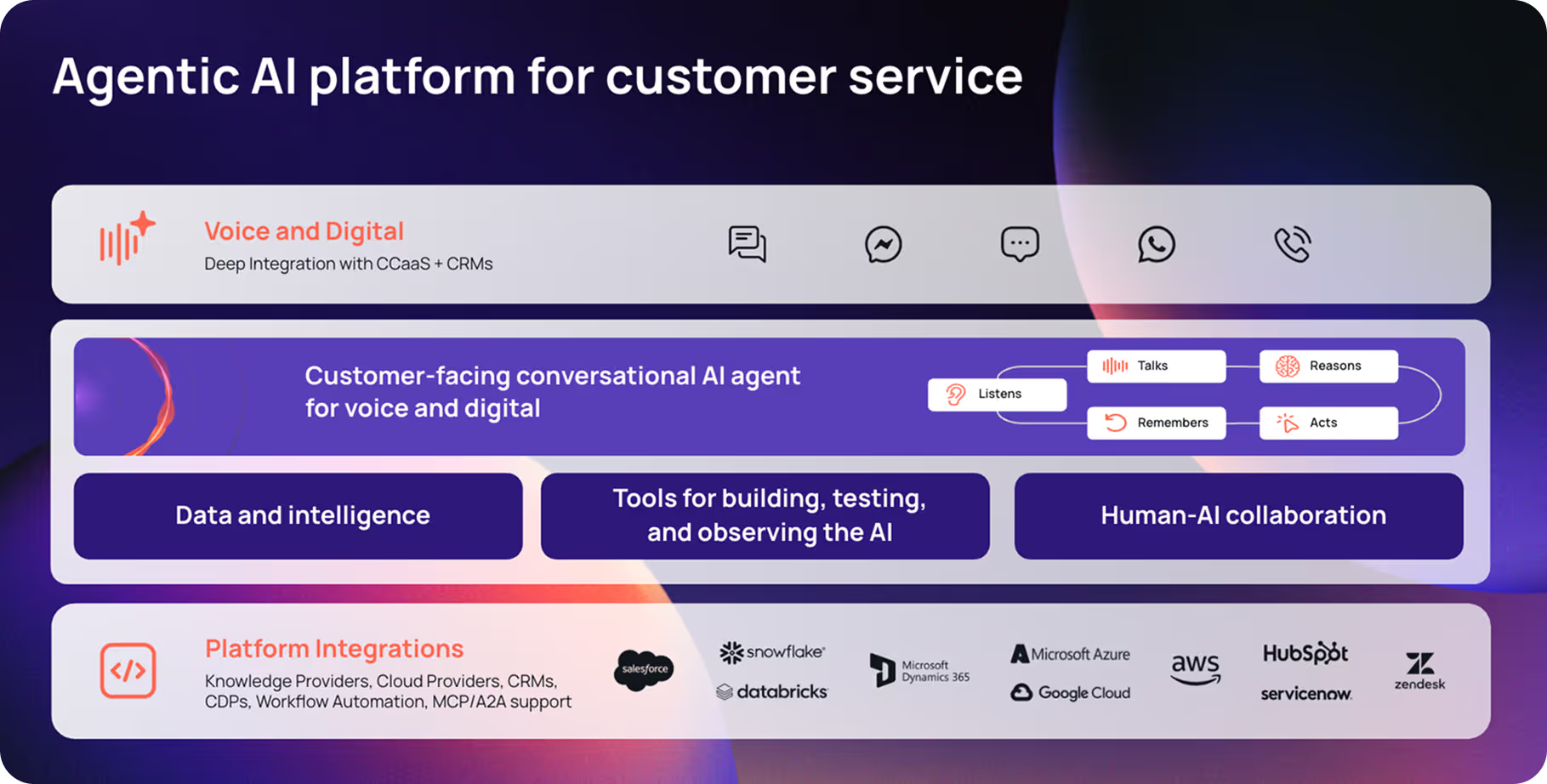
An advanced agentic CX platform can fully automate complex interactions. For example, ASAPP's CXP orchestrates AI agents, the human workforce, and backend systems (CRMs, ticketing, knowledge base, order management, etc.) to resolve customer issues faster, at a lower cost-to-serve, and with higher customer satisfaction.
What is AI for customer service
AI for customer service refers to the application of machine learning, natural language processing, predictive analytics, and generative AI to improve support workflows across voice and digital channels. Unlike legacy rule-based tools, agentic AI interprets open-ended customer conversations, adapts in real time, and takes action without manual intervention.
Today, AI is embedded across the technology stack, from agent desktops and QA tools to workforce management, reporting, and AI agents. This isn’t a single tool. It’s an ecosystem where data flows between functions to enhance customer interactions at every stage.
It’s critical to distinguish agentic AI systems from legacy AI systems. Earlier bots relied on rigid decision trees and often stalled. In contrast, AI agents use generative AI to reason through problems, adapt dynamically, and take actions to reach resolution.
Core technologies powering AI in customer service:
- Natural language processing (NLP): Systems that interpret customer messages and speech to identify intent, extract key information, and detect customer sentiment. Advanced NLP handles variations in human expression, allowing customers to speak naturally.
- Machine learning: Models that learn from historical interactions and outcomes to improve recommendations, routing decisions, and predictions over time.
- Automation and orchestration: Workflows that trigger actions—updating CRM records, processing refunds, resetting passwords, etc.—without human effort. Automation spans both customer-facing interactions and back-office integration.
- Predictive analytics: Using historical and real-time customer data to forecast contact volumes, detect at-risk customers, surface next-best actions, and anticipate which customer inquiries will require escalation.
- Conversational AI: AI systems that can understand, process, and respond to human language in a natural way. Using technologies like natural language processing, machine learning, and increasingly generative AI, these systems power chatbots, virtual assistants, and AI agents that handle customer interactions.
- Generative AI: AI that uses machine learning to create original content based on context. In customer service, this means an AI agent can understand what the customer needs, respond with natural language, and use reasoning to resolve the customer's issue.
- Agentic AI: Goal-directed systems that plan, reason, and take actions on behalf of customers. Agentic AI can safely access backend systems to gather information, update a customer's account, process transactions, and more.
How AI works in customer service workflows
AI now operates across the full customer support lifecycle—before an interaction begins (forecasting and staffing), during live conversations (assistance and automation), and after resolution (QA, analytics, and coaching). This full-lifecycle approach is why AI is fundamental infrastructure woven throughout customer service operations.
During a typical interaction:
- A customer initiates contact
- AI identifies the customer’s intent, extracts key information, and detects sentiment
- AI routes the customer to a human, AI agent, or other self-service option based on a range of factors, including issue type, customer history, agent availability, and organizational policies
- For automated interactions, an AI agent converses with the customer and takes action to resolve their issue
For live channels, AI can analyze customer conversations in real time and push suggested replies, knowledge base articles, compliance prompts, and next-best actions directly into the agent desktop. Support agents receive relevant information proactively as the conversation unfolds.
Automation capabilities include:
- Executing back-office actions like issuing credits, changing bookings, and updating shipping addresses
- Connecting to CRMs, order management systems, and billing platforms to read context and write outcomes
- Processing customer requests end-to-end without human involvement
Post-interaction workflows:
- AI-generated summaries documenting the interaction
- Automatic dispositioning and tagging with relevant categories
- QA scoring against compliance, empathy, script adherence, and resolution criteria
- Extraction of themes and deflection opportunities for future self-service improvements
Agentic AI tools connect to enterprise systems via APIs to rich context (customer history, account status, recent orders) and write outcomes (interaction summaries, escalation flags, follow-up triggers). Configuration and governance policies define which intents get fully automated, require human review, or should always be escalated to live agents.
Key use cases for AI in customer service
Enterprise contact centers use AI for a range of use cases, which will naturally vary depending on your specific industry and unique business goals.
→ Learn more in this deep dive into the top 5 use cases for AI in customer service.
Fully automated customer service
Much more capable than traditional chatbots, today’s AI agents can now automate complex customer interactions entirely on their own. The AI orchestrates multi-step workflows within backend systems—processing returns, updating billing, or modifying reservations—to fully resolve customer issues without human intervention. The best agentic AI platforms include well-designed options for keeping a human in the loop for critical approvals or highly sensitive situations.
Interaction intelligence
Every customer interaction generates data, which AI can gather and store. The AI then uses this stored data to continuously learn, improve its own performance, and personalize future customer interactions. This stored data can be aggregated and analyzed to generate new intelligence for the enterprise, informing product development, marketing strategies, and operational changes.
Agent assistance and real-time guidance
AI dynamically supports agents in real time during their live interactions by surfacing relevant knowledge base articles, auto-filling forms and customer data fields, guiding regulatory disclosures at the right moment, drafting accurate responses, and recommending the next-best actions to take. This agent support improves accuracy and efficiency, and shortens onboarding times for new hires.
Rule-based automation
Despite the rise of generative AI, traditional rule-based tools still play a functional role in the CX ecosystem, powering standard chatbots, basic virtual assistants, and simple automated workflows. This type of automation works best for high-volume, repetitive, and simple inquiries, such as checking a balance or store hours. However, these rule-based systems are unable to problem-solve or handle nuance.
Quality assurance and performance insights
Today, AI comprehensively analyzes 100% of conversations to identify emerging trends, flag critical compliance issues, and surface specific coaching opportunities for agents. The benefits to your operations include scalable QA, more consistent and unbiased evaluation criteria, and faster feedback loops for your workforce, which streamline improvement efforts.
Routing and workflow optimization
Connecting the customer with the right resource saves time and money. AI intelligently routes incoming inquiries based on intent, perceived urgency, customer profile data, and more. By aggressively eliminating manual bottlenecks, AI dramatically reduces the need for human triage and immediately improves the overall customer service experience by cutting wait times.
Common misconceptions about AI in customer service
Despite rapid adoption, misconceptions about AI technology in customer service still slow decision-making in many enterprises. Addressing these directly helps organizations move past fears and toward productive implementation.
- "AI is best used to support human agents." Until recently, this was absolutely true. But as generative AI has enabled the safe automation of complex workflows and nuanced conversations, it's time to rethink this model. The benefits of AI automation already far outweigh the benefits of augmentation, and as AI platforms continue to evolve, automation will become even more crucial in enterprise customer service.
- "Implementation requires a full system overhaul." Many CX leaders fear a multi-year IT nightmare. But many current AI solutions gracefully layer into your existing CX stacks and begin delivering measurable value incrementally, all without forcing you to immediately replace your core, foundational systems.
- "AI is too expensive and complicated to deploy." You absolutely do not need an army of expensive data scientists to leverage AI anymore. Purpose-built AI solutions have successfully made this incredibly powerful technology highly accessible, affordable, and infinitely scalable for the modern enterprise.
- "ROI takes years to realize." Many organizations see early gains in handle time, resolution rates, and QA efficiency within the first few months of targeted deployments. By dramatically reducing labor hours required for customer service, AI agents deliver quick wins with sustainable long-term returns.
- "AI works 'out of the box' without tuning." Many AI-powered tools provide value right away. But performance improves significantly with ongoing optimization, effective feedback loops, and workflow alignment with real-world processes.
- "AI leads to worse customer experiences." Well-implemented AI can actually increase customer satisfaction and NPS by eliminating wait times, providing 24/7 availability, ensuring consistency, and handling routine inquiries instantly while offering easy escalation to humans.
How to evaluate AI customer service platforms
Evaulation of AI customer service platforms should focus on performance in real workflows, not feature lists or polished demos. Enterprise buyers managing complex technology stacks, regulatory requirements, and global customer support teams need practical decision-making frameworks.
Evaluation should prioritize:
- Proof-of-value or pilot projects measuring concrete KPIs: AHT, containment/automation rate, FCR, QA coverage, CSAT/NPS, and agent satisfaction
- Performance in live queue environments with actual customer needs rather than synthetic test scenarios
- Clear documentation of how metrics were achieved and validated
You should consider these core evaluation dimensions in your decision-making:
Augmentation vs. automation
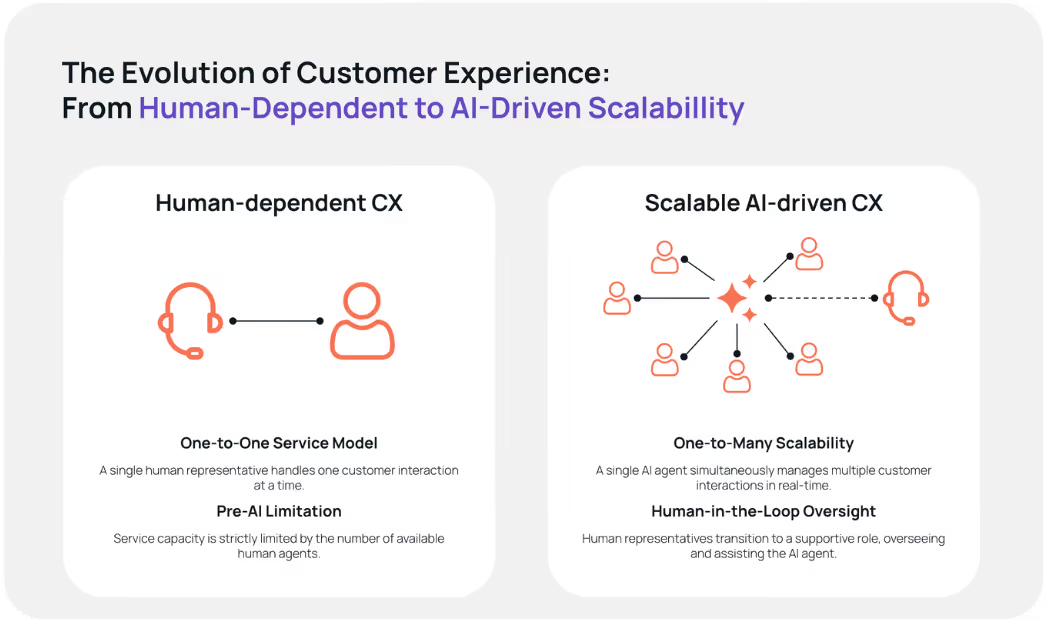
Until recently, AI tools that support humans were your best bet for AI investments. But as agentic platforms have evolved, the AI value equation has shifted strongly toward automation. Today, agentic CX platforms actively orchestrate customer service end-to-end. Automation of complex interactions and workflows consistently delivers more value than AI assistance.
Consistent experience across voice and digital channels
In most contact centers, voice is still the most important channel for complex issues. It's also the most expensive. So, an AI platform that successfully automates voice interactions promises strong value. As you evaluate solutions, prioritize those that work seamlessly across channels—voice and digital—while maintaining consistent conversational context throughout the customer journey. This prevents customers from having to repeat themselves when switching channels or from AI to human support.
Integrations
When evaluating vendors, look beyond basic integrations with tools like your CRM or contact center platform. To fully resolve customer issues, the AI must be able to take action and complete tasks within backend systems. For maximum automation potential and long-term value, look for AI systems that can leverage your existing APIs without requiring extensive reconfiguration.
Human-AI collaboration
When choosing augmentation solutions, you should prioritize platforms that offer real-time AI assistance during live interactions, in addition to tools that assist with post-interaction wrap-ups.
For automation, the issue of human-AI collaboration is even more critical. Most solutions do not enable real-time collaboration between AI agents and humans. Instead, they treat the humans in the loop as escalation points. AI agents that are sophisticated enough to consult a human for specific guidance or high-level approvals—without transferring the interaction—will save labor costs while simultaneously delivering a far better customer experience.
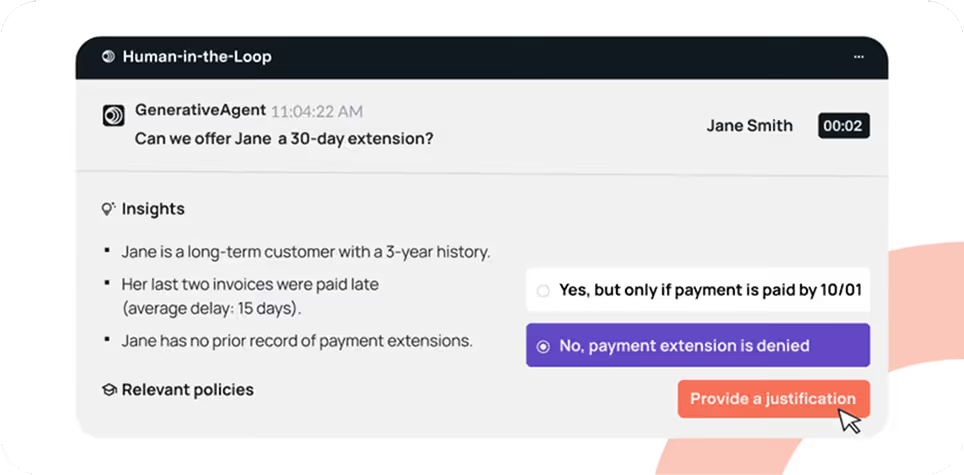
Implementing partial automation, where humans strategically handle only certain sensitive tasks or complex decision points, vastly improves operational efficiency without sacrificing CX. It also sets the stage for new roles for human agents, supervisors, and QA and compliance specialists. As AI takes the lead in customer service, the human workforce will shift toward oversight and governance.
Operational governance
Enterprise deployment requires ultimate enterprise control. Thoroughly assess any platform's underlying capabilities for strictly maintaining regulatory compliance and quality assurance by ensuring it can automatically analyze all conversations and proactively flag any potential issues or risks. Ensure the chosen solution actively provides your CX leaders with the comprehensive visibility and granular control needed to securely manage massive AI deployments across highly complex, sensitive enterprise workflows.
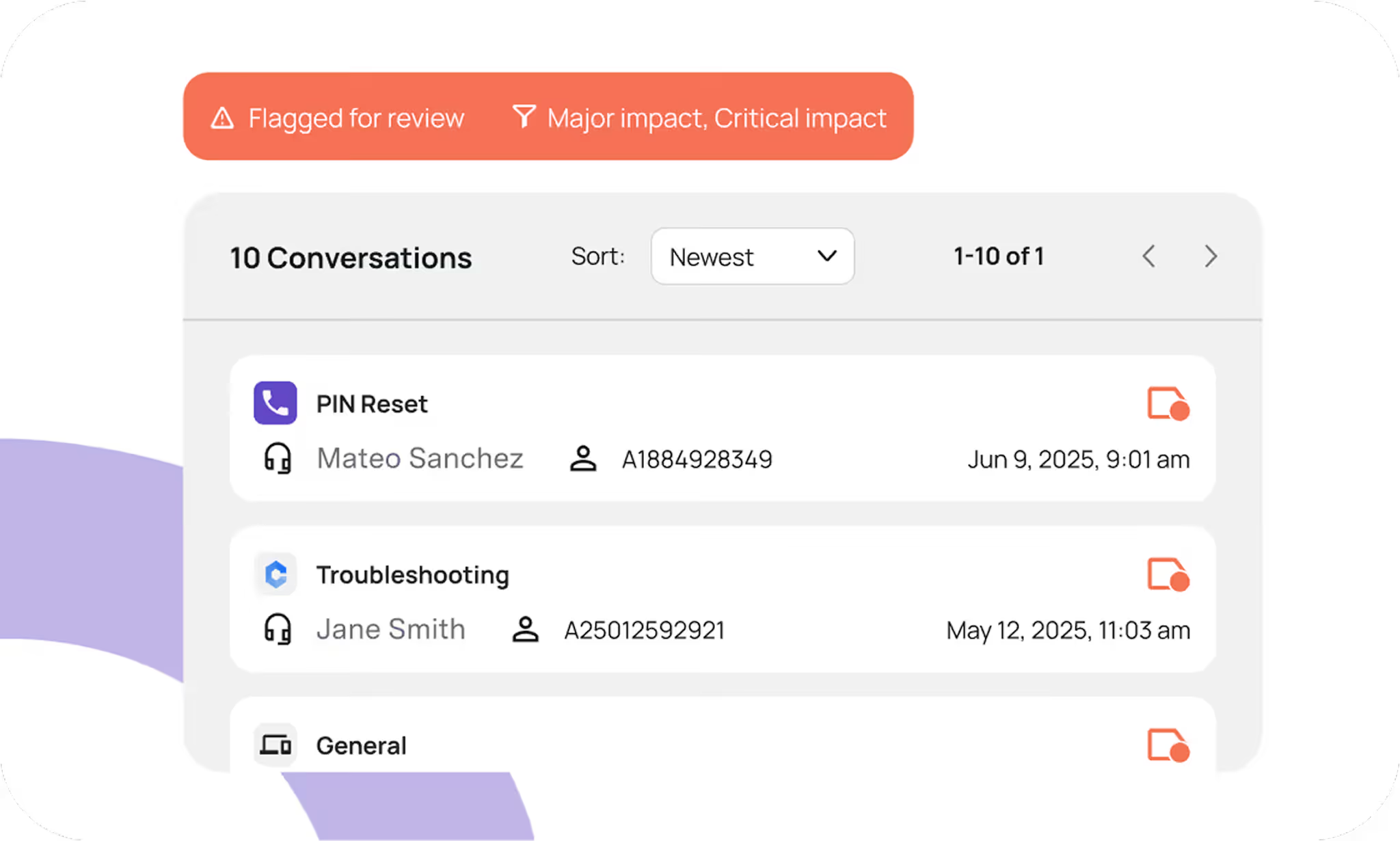
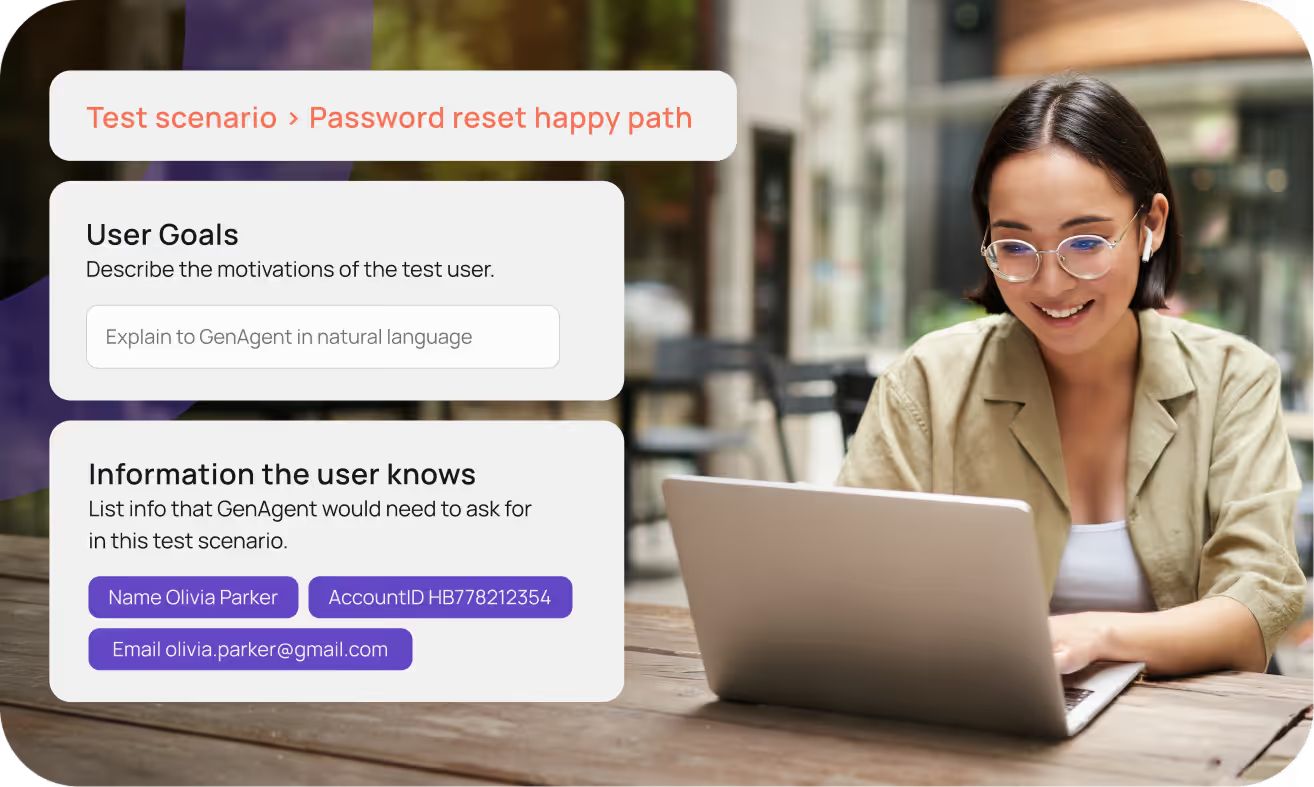
Tools for building, tuning, and testing
AI deployments require ongoing tuning to maintain high performance. Confirm that the platform natively allows for accessible optimization. Specifically look for robust tuning and testing tools, including realistic simulations. These tools will allow your team to continuously and safely align the AI's real-world performance with your evolving workflows, customer behavior, and business rules.
Why enterprise teams choose ASAPP
Enterprise teams choose the ASAPP customer experience platform (CXP) because it delivers more than incremental automation. It delivers end-to-end resolution. Rather than layering AI on top of existing workflows, CXP positions AI agents at the center of customer interactions, enabling them to take action across systems and fully resolve issues. This shift from assistance to execution helps organizations reduce cost-to-serve while delivering faster, more accurate outcomes for customers.
Another key reason is ASAPP’s enterprise-grade approach to scale, control, and safety. CXP combines AI reasoning, workflow orchestration, and human oversight, allowing teams to automate confidently without sacrificing governance or compliance. With deep integrations into existing systems, real-time observability, and built-in human-in-the-loop capabilities, organizations can deploy quickly, maintain visibility into every decision, and continuously optimize performance. The result is a scalable, AI-native service model that improves capacity, consistency, and customer experience simultaneously.
Build a smarter customer service operation with AI
AI truly transforms customer service when it takes the lead, engaging directly with customers, and orchestrating service end-to-end, rather than merely supporting a human agent. The ultimate goal of implementing AI is achieving better business outcomes: faster, more personalized, and infinitely scalable support for your customers. Enterprise teams should strictly evaluate potential AI solutions based on their real, measurable impact, not industry hype.
If you are ready to upgrade your customer service operation with true agentic automation, book a demo to get started.