Table of Contents



For years, the value story for AI in customer service has been overly simplistic: deflect calls, reduce headcount, and call it a win.
Enterprise CX leaders know that story falls apart quickly.
It doesn’t capture the complexity of modern service operations or what agentic AI is actually capable of delivering.
It’s time for a new value equation.
The old equation: Cost reduction through containment
Traditional automation tools like IVRs, chatbots, and basic virtual agents have been measured on one primary metric—containment.
- How many interactions were deflected?
- How much cost did we save per contact?
That model treats automation as a gatekeeper that blocks or reroutes customer inquiries before they reach a human.
But that approach has two major flaws:
- It optimizes for avoidance, not resolution.
- It ignores the broader economics of customer experience.
Containment without resolution leads to repeat contacts, frustrated customers, and hidden costs that don’t show up in basic ROI calculations.
The new equation: Resolution, experience, and revenue
Agentic AI shifts automation from deflection to resolution. Instead of acting as a barrier, it becomes an active participant in resolving customer issues end-to-end.
With that in mind, the updated value equation includes three dimensions:
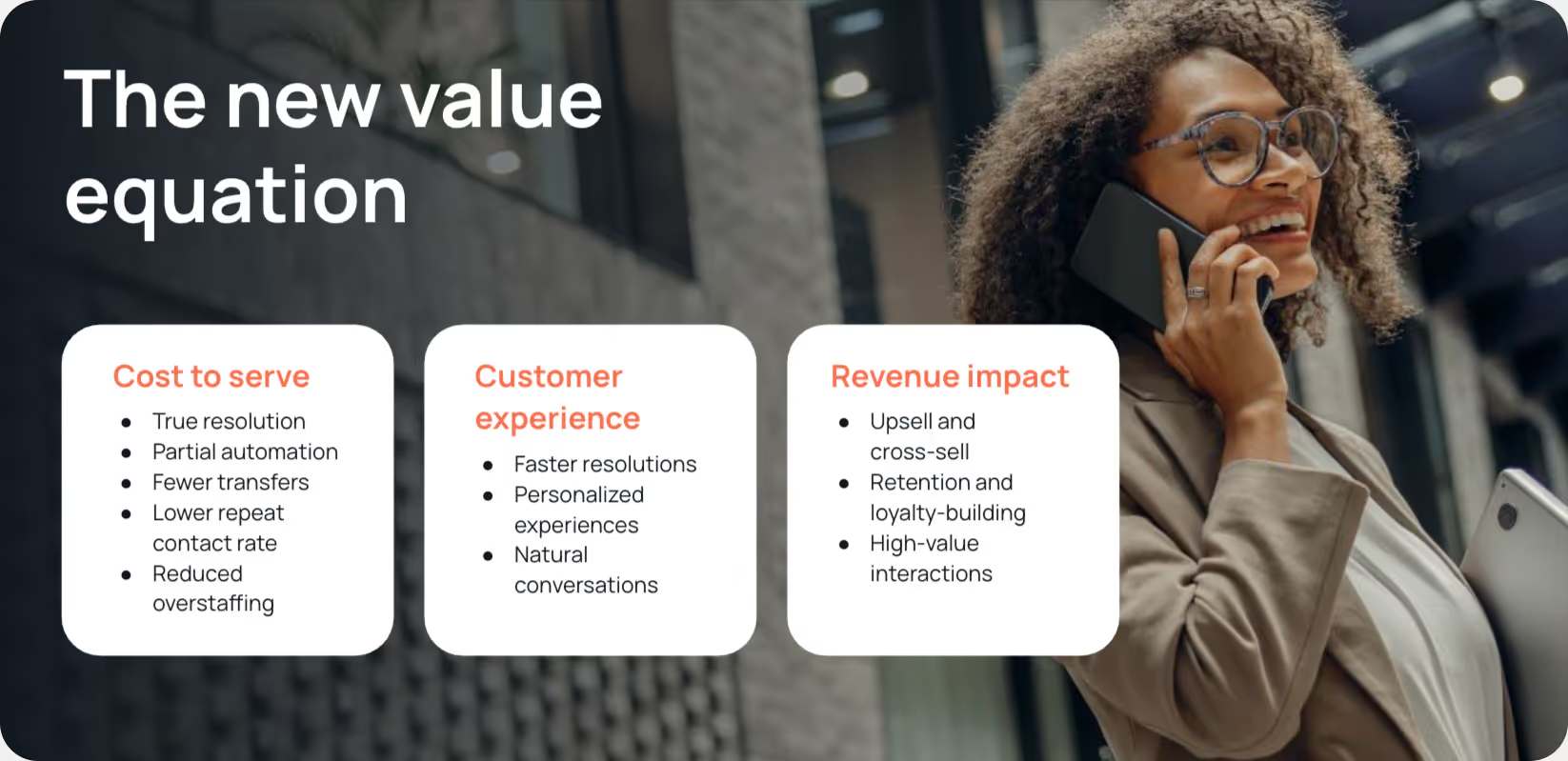
1. Cost to serve (more nuanced)
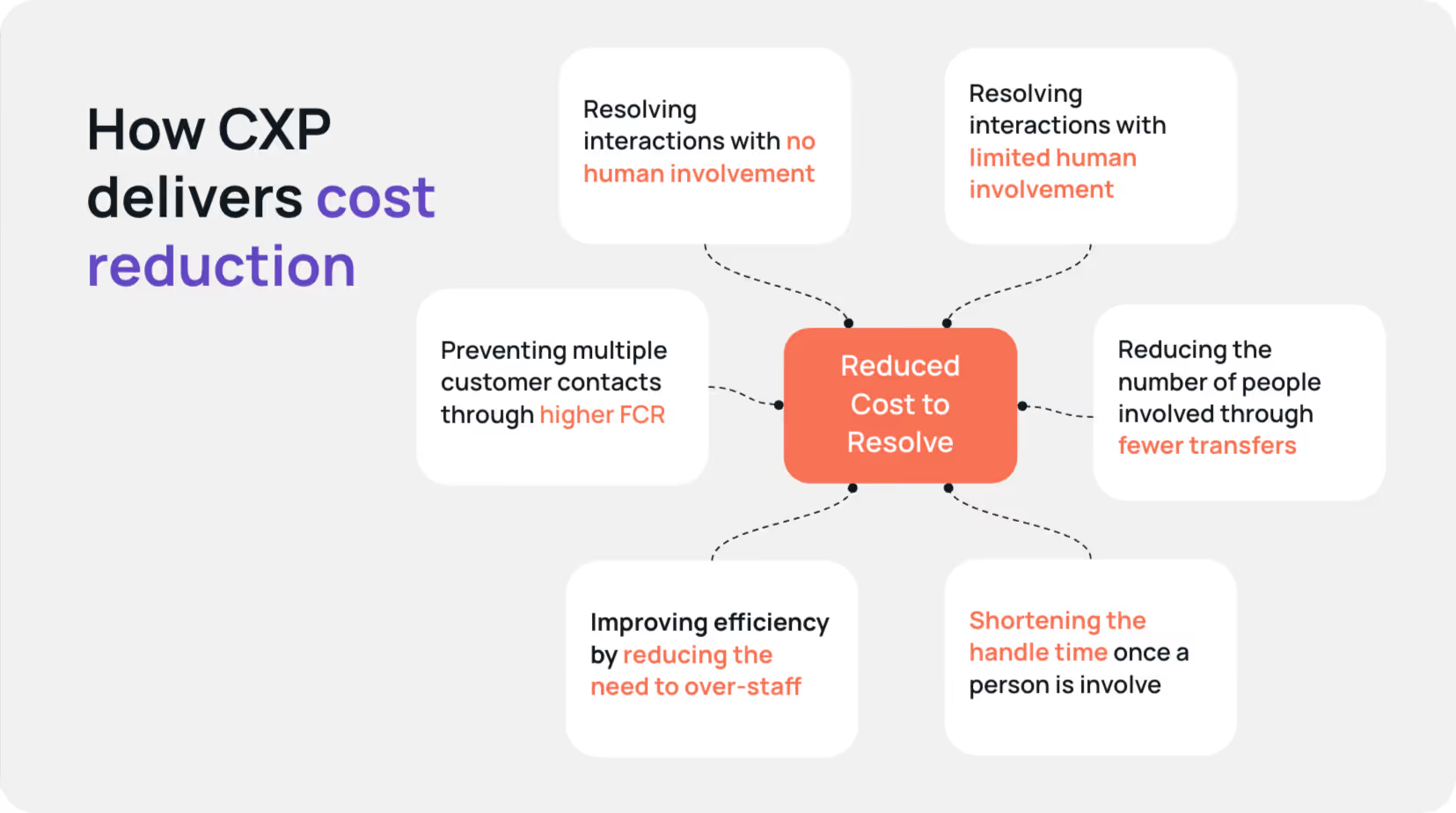
Cost reduction still matters. But the levers are far more sophisticated than containment and deflection:
- True resolution without human involvement: Not just containment. Complete issue resolution.
- Partial automation with a human in the loop: Automate the majority of the interaction while minimizing agent effort.
- Fewer transfers: Better routing reduces the number of agents involved per interaction. That’s a major, often overlooked, cost driver.
- Lower repeat contact rates: First-contact resolution eliminates downstream volume.
- Smarter handling of volume spikes: AI absorbs demand variability, reducing the need for overstaffing.
Many enterprises either overstaff to maintain low wait times and meet SLAs during surges, or understaff and accept poor CX. Agentic AI removes that tradeoff by absorbing demand variability and enabling more efficient workforce planning.
2. Customer experience (the multiplier)
Cost savings alone don’t compound. The quality of the customer experience is where agentic AI becomes a force – and value – multiplier.
With an agentic CX platform that automates interactions end-to-end…
- Customers get faster, more accurate answers
- Interactions are personalized and contextual
- Conversations feel natural, not scripted
If customers bypass automation or escalate immediately, value collapses. So, great conversational experiences aren’t just a “nice to have.” They’re foundational to ROI.
3. Revenue impact (the missing piece)
Traditional AI ROI models fail to consider revenue in addition to cost savings. When agentic AI takes over repetitive, low-value interactions, human agents can focus on:
- Upsell and cross-sell opportunities
- Retention and loyalty-building conversations
- High-value, complex customer needs
At the same time, the AI enables more efficient outbound engagement. This is where the equation shifts from cost center optimization to growth enablement.
Hidden value levers most CX leaders miss
When the ASAPP team works with enterprise organizations, we often uncover major cost drivers that were previously invisible. Here are just a few we’ve identified.
Transfers are more expensive than you think
Even a small percentage of transferred interactions can drive millions in added cost. Better routing improves both CX and unit economics.
Idle capacity is a silent budget killer
To manage unpredictable demand, many contact centers overstaff, paying for idle time. Agentic AI absorbs those spikes, allowing for leaner, more efficient workforce planning.
Repeat contacts destroy ROI
Unresolved issues create repeat volume. Deflection doesn’t break that cycle. But an AI agent that fully resolves customer issues will.
Expanding the value surface area
An agentic CX platform doesn’t just optimize existing workflows. It expands what’s possible to automate.
Traditional bots are limited to basic tasks.
An agentic platform like ASAPP CXP can orchestrate AI agents, backend systems, and your human workforce to fully resolve complex customer issues that require multi-step workflows. That opens a vast range of possibilities for automation. And that expands your possibilities for value.
Unlocking more use cases with human-AI collaboration
Full automation isn’t always required to create value. If the AI can reduce friction for customers, ease burdens for your contact center, and lead the customer to resolution, that’s a win – even if humans are involved for part of the workflow.
In many enterprises, certain types of interactions aren’t considered for automation with an AI agent because:
- APIs don’t exist
- Processes are too sensitive
- Full automation feels risky
But if you can keep a human in the loop to exercise judgment and handle tasks the AI agent can’t perform, those barriers to automation disappear.
For example, a 12-minute interaction can become 1–2 minutes of human effort with AI handling the rest. The efficiency gain is clear. But the bigger win is that it unlocks new use cases for automation.
Full interaction coverage = Full visibility
Typical AI agent point solutions handle interactions that are routed to them. But an agentic CX platform can orchestrate every interaction from hello to resolution. When a platform like CXP is the customer’s first touchpoint for voice and chat, you gain visibility into 100% of the customer interaction.
This creates a powerful feedback loop to:
- Identify emerging issues faster
- Prioritize new automation opportunities
- Improve upstream processes to eliminate issues that drive customer inquiries
This is where agentic AI evolves from an execution layer into an intelligence layer.
How value compounds over time
Agentic AI value isn’t rooted in static moments. It compounds over time as the AI handles more interactions and orchestrates customer service delivery end-to-end.
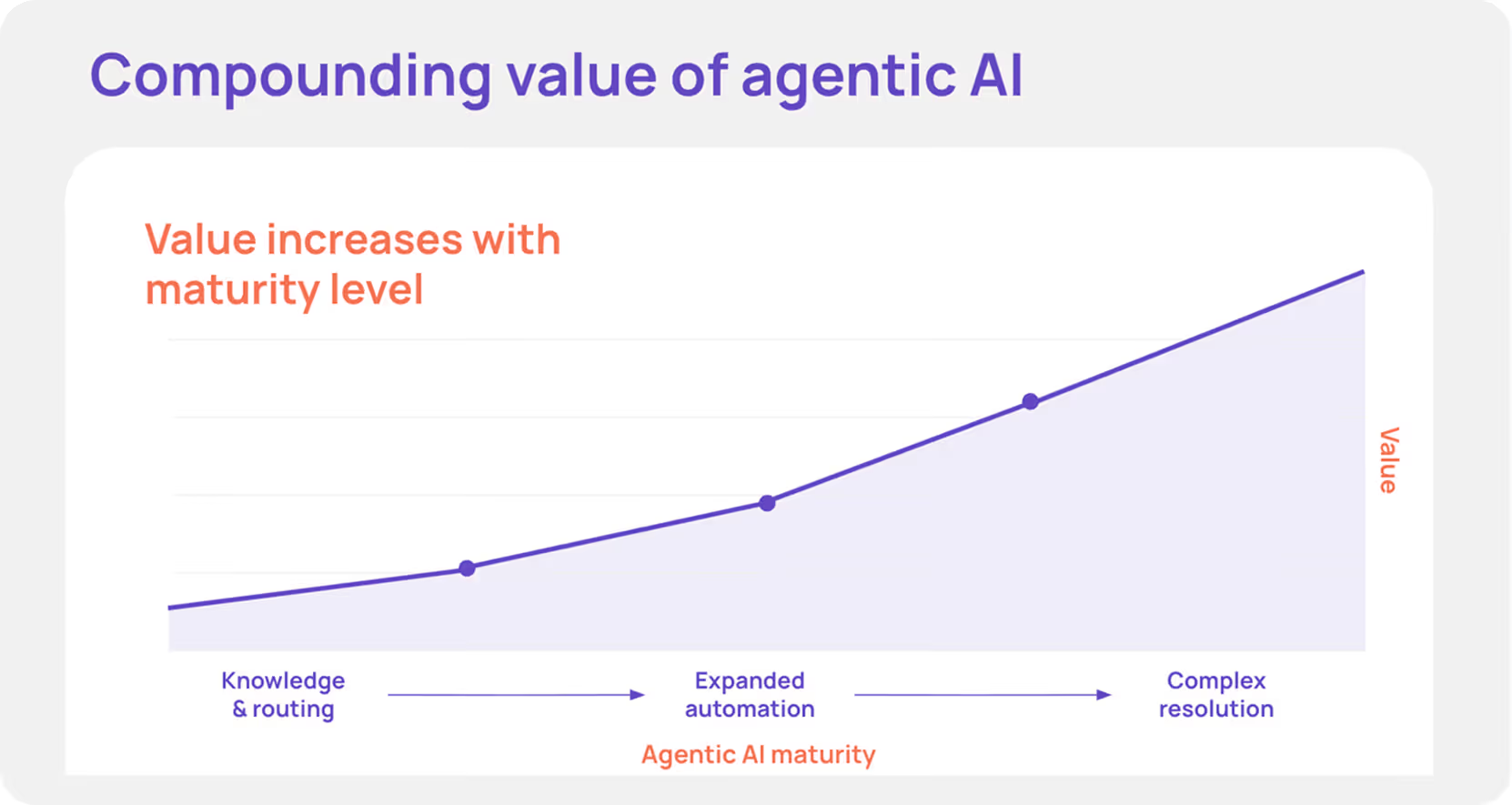
We typically see organizations progress across three layers of maturity with agentic AI:
Level 1: Knowledge & routing
In this first phase, the enterprise focuses on quick wins, using the AI to:
- Answer knowledge-based questions
- Route customers correctly the first time
- Reduce basic contact volume
This phase delivers immediate cost savings and fast ROI.
Level 2: Expanded automation
In this phase, the enterprise accelerates adoption with new use cases to:
- Automate simple workflows with APIs
- Introduce HILATM (Human-in-the-Loop Agent) workflows for partial automation
- Reduce handle time and increase agent capacity
Here, value starts to scale in a meaningful way.
Level 3: Complex resolution
In this final phase, the enterprise focuses on automating end-to-end workflows that:
- Fully resolve complex, multi-step interactions
- Handle high-stakes scenarios
- Absorb demand spikes without additional staffing
This is where the economics of an agentic CX platform change dramatically—and where ROI begins to compound.
The flywheel effect: More coverage → more value
Once an enterprise is using agentic AI to fully resolve complex, high-stakes interactions, it can shift focus to ongoing value creation. There are two primary levers that drive continuous value growth:
1. Increase automation coverage
Expand into new use cases and channels to create more opportunities for value.
2. Optimize continuously
Refine performance across interactions—improving quality, reducing friction, and expanding capabilities. Small gains compound quickly at scale.
The bottom line: From cost center to value engine
Agentic AI isn’t just better automation. It’s a new operating system for customer experience.
When you expand the value equation beyond containment to include:
- True resolution
- Customer experience
- Revenue impact
- Operational intelligence
…you unlock a level of ROI that traditional automation can’t match.
The question is no longer: How much cost can we eliminate?
It’s: How much value can we create?