Table of Contents



In today’s cloud-first world, agility is critical. But agility without alignment creates risk. As organizations scale in the cloud, financial accountability must evolve alongside technical innovation. Achieving real impact requires cohesion across engineering, finance, and leadership, ensuring that speed and cost discipline move in lockstep.
FinOps, an evolving operational and cultural framework, is essential in addressing this challenge. It helps organizations align engineering, finance, and leadership to manage variable cloud spend with accountability and discipline.
In this post, we share our FinOps journey, which led to a more than 45% reduction in annual cloud expenses over two years. We’ll share what worked, the lessons we learned, and practical steps you can apply in your own organization.
From Zero to Strategy: Kicking Off the FinOps Journey
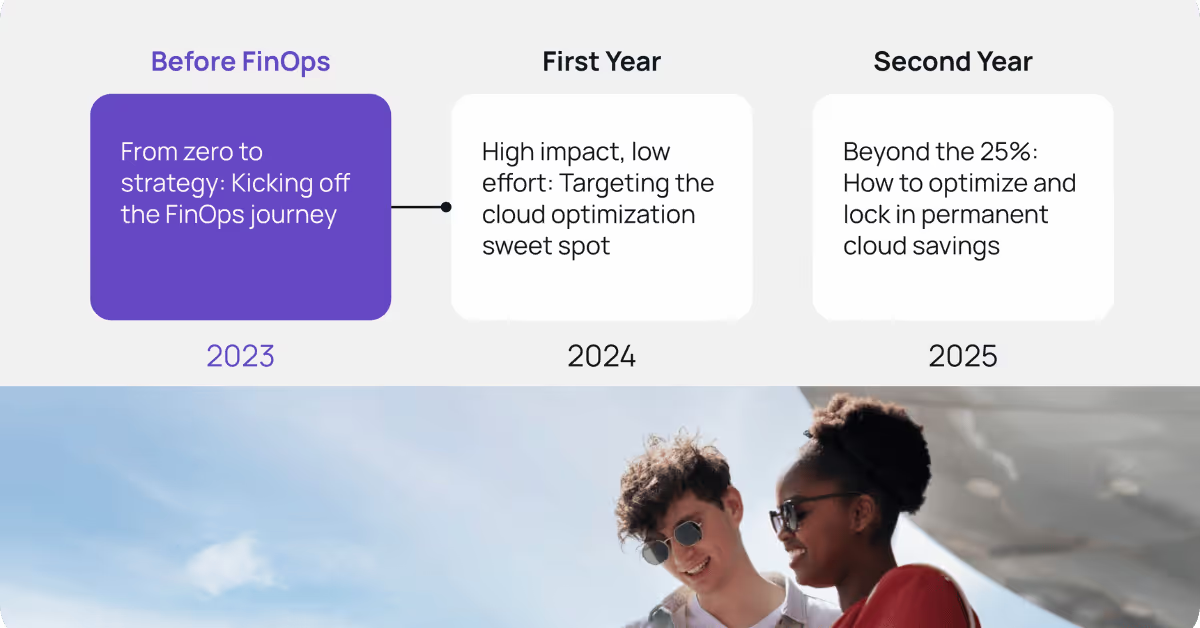
We started small with a comprehensive assessment to establish a robust foundation.
Our assessment provided a clear view of our cloud cost baseline and cultural readiness for our FinOps journey. It also helped us define next steps for visibility , identified crucial areas for improvement, and allowed us to proactively anticipate key implementation challenges. This critical information shaped our forward strategy, including the narrative needed to communicate the expectations of this practice to key stakeholders.
Guided by the data collected, we zeroed in on the capabilities that would deliver the biggest, fastest impact:
- Set up the reporting to identify and track savings.
- Define initial training for the organization.
- Establish a communication plan to engage key stakeholders and the broader organization.
With this plan in place, we officially kicked off the practice—with continuous improvement as a core principle. For a more holistic approach, we:
- Created awareness for this practice.
- Enabled visibility and accountability through tagging, reporting, and training
- Defined a short-term plan on how to tackle the low-hanging fruit cost optimization and communicate success.
From our initial assessment, we knew that our annual cloud costs were trending upward with a stable 21% increase, a trajectory projected to continue without intervention.
Navigating FinOps: The three core phases
The FinOps framework outlines a continuous cycle with three phases:
- Inform: Visibility & allocation
- Optimize: Efficiency & cost reduction
- Operate: Continuous improvement & governance
While this article will just scratch the surface of the Optimize phase, long-term FinOps success requires all three phases to operate in a holistic ongoing loop.
High impact, low effort: Targeting the cloud optimization sweet spot
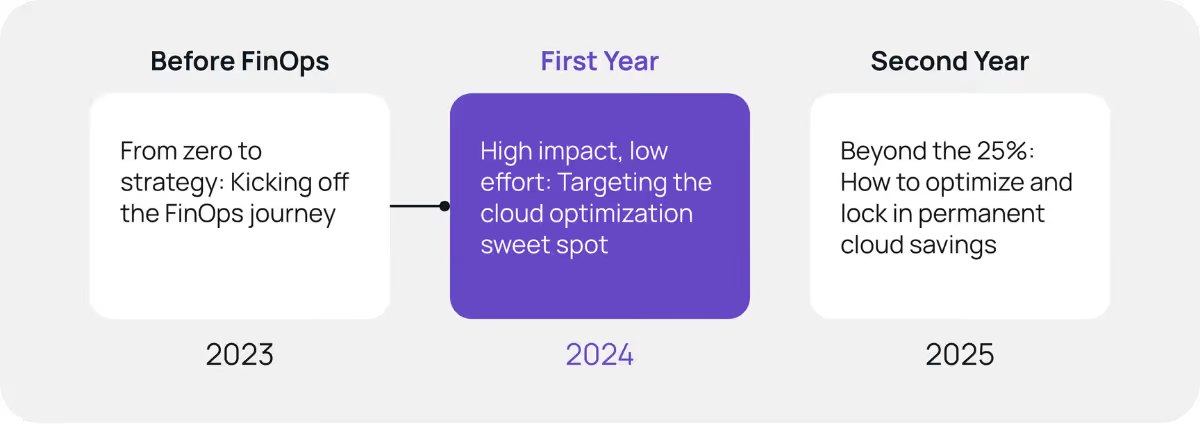
According to the Flexera 2025 State of the Cloud Report and other industry benchmarks, more than 25% of cloud spend is typically wasted. These inefficiencies are caused by idle resources, overprovisioning, and limited visibility. Based on our experience, this is where you can gain quick wins and build early momentum.
To put this in perspective with practical numbers, a company with an annual cloud expenditure of $10 million could expect a savings of $2–3 million.
During the Optimization phase, we focused on two main groups of activities to achieve high impact with low effort using the information we collected during the Inform phase.
Usage optimization
The primary objective was waste reduction. While cloud providers offer optimization suggestions and performance data, which can be exported for more in-depth, custom analysis, collaboration with service owners proved critical. This partnership ensured that services were tuned effectively without causing disruptions. Key actions included:
- Decommissioning unused resources: Actively finding and decommissioning resources that are provisioned but abandoned.
- Rightsizing underutilized resources: Scaling down resources that were overprovisioned based on usage patterns and performance data.
Rate optimization
Just as usage optimization requires partnering with service owners, rate optimization requires close collaboration with the finance team and the cloud providers. Savings Plans and Reserved Instances often involve upfront payments and multi-year investment commitments. A close partnership with the finance team ensures that strategic shifts in liquidity are balanced against long-term cost stability. By paying special attention to these discounts, we directly reduced our COGS and improved gross margins, turning cloud procurement into a strategic lever for profitability.
When you have different approaches like savings plans, reserved instances, and spot instances, a good initial strategy is to cover at least the production workload and a percentage of non-production workloads, typically for a one-year term. This mitigates risk as the practice develops. It is crucial to also factor in how other cost optimization initiatives may affect the total capacity covered by these financial commitments to avoid shortfalls.
Larger endeavors: Moving beyond cost-cutting
As our optimization practice matured, early successes served as a catalyst for broader, more strategic endeavors, such as modernization projects. Efficiency gains created the necessary financial headroom to allocate resources to larger engineering initiatives that can maximize cloud value, moving from simple cost-cutting toward deeper architectural and organizational transformation.
During 2024, the first year after this practice was implemented, we achieved:
- Over 28% cost reduction compared to the previous year’s average monthly spend
- A 44% decrease within the same year.
Beyond the first 25%: Locking in permanent cloud savings
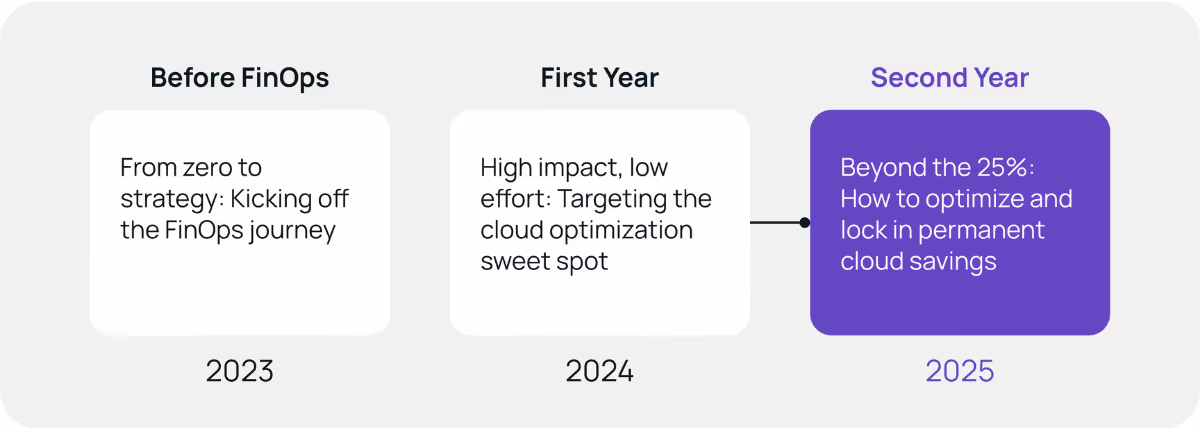
Achieving the initial 25% savings quickly is certainly possible. Maintaining these savings over time requires a sustainable strategy with cultural reinforcement.
We established a second in-depth company-wide training that included both technical and non-technical content, such as cost-conscious service design and best practices that target all levels from engineers to managers and leadership.
When a new fiscal year approaches, we plan the upcoming cycle with a strong focus on FinOps. That means defining the high-level objectives, which will then become tangible, cross-team OKRs. These OKRs are how we mature our FinOps practice and make it part of our culture, concentrating on areas such as establishing new governance processes and setting specific cost optimization targets.
This ensures the value of FinOps is clearly communicated and reinforces the idea that FinOps is a permanent, company-wide initiative, not an isolated effort.
Tooling up for permanent, next-level FinOps optimization
While manual efforts can be highly effective, they require significant human effort. Introducing specialized tooling was crucial for our optimization process. This move shifted the burden away from time-intensive manual work, dramatically improving scalability. It also unlocked additional savings through the more efficient application of complex optimization techniques, such as leveraging spot instances and more efficient rightsizing.
Two main optimization approaches emerged:
- Read-Only Approach: Automated monitoring and optimization suggestions for manual review and execution. This approach often includes assistance with your tagging strategy.
- Read-Write Approach: Automatically reconfigures and rebalances infrastructure in real-time, enforcing optimization policies and potentially driving up to 40% additional savings across your remaining workloads.
Technical capabilities included:
- Optimized node provisioning: Analyzed workloads to select the most cost-effective instance type based on the cloud service provider's offerings.
- Dynamic rebalancing: Automatically replaced inefficient nodes with optimized ones when demand changes.
- Spot instance utilization: Leveraged spot instances for potential savings of up to 90%, including a risk mitigation strategy (fallback layer) to handle interruptions.
- Node consolidation: Increased node efficiency by consolidating pods onto fewer nodes, thereby reducing the need for additional infrastructure.
Year two: Scaling maturity and impact
During the second year, we achieved a more robust and mature FinOps practice by:
- Implementing more in-depth employee training to increase cost-conscious solution awareness
- Deploying new tooling to automate cost reductions
- Defining enhanced cost tracking mechanisms
With these foundations in place, our focus shifted to executing more complex projects and programs, in addition to new tooling. These new initiatives drove an additional 29% decrease in monthly average costs for a total of 66% reduction compared to the 2023 monthly average.
FinOps as a cultural engine for continuous improvement
FinOps is not a one-time project or a short-term cost-cutting measure. It is a cultural and operational shift that establishes financial accountability for the variable cloud spend—and converts efficiency into strategic advantage.
By successfully cycling through the Inform, Optimize, and Operate phases, fueled by data-driven insights, we created durable savings while creating the financial headroom to fund larger engineering initiatives and strategic modernization efforts. Over two years, this resulted in a 45% reduction in cloud expenses.
Ultimately, our goal was to make efficiency a permanent, company-wide culture. This requires a commitment to continuous improvement, leveraging Kaizen loops to mature our capabilities. By integrating company-wide training programs and specialized, automated tooling, we embedded FinOps into daily operations. That cultural shift empowers our teams to help drive the FinOps engine that maximizes our cloud value, leading to greater stability, innovation, and long-term financial sustainability.
More FinOps insights to come
This is the first post in our FinOps series. Future posts will cover:
- Our approach to implementing a comprehensive tagging strategy
- How to develop capabilities for a mature FinOps practice
- Strategic upfront payments and shortfall avoidance
Stay tuned!